

Source: https://mg.co.za/article/2019-08-30-00-elephants-in-the-room
Elephants in the room
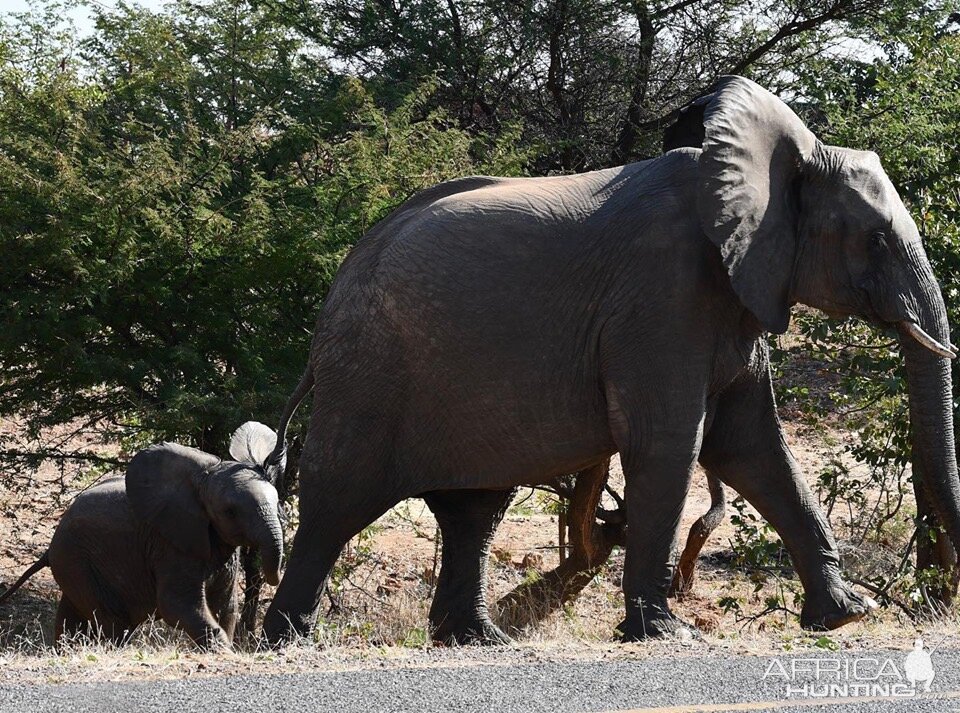
World Elephant Day was held on August 12 to bring attention to the plight of the Asian and African pachyderm.
Recently President Mokgweetsi Masisi suspended a ban on elephant hunting in Botswana, home to the largest herd on the planet. The decision revealed deeply seated divides in attitudes and beliefs regarding the appropriate management strategies for the protection of wildlife.
Debates further exposed polarised approaches to the conservation and management of elephants. One approach suggests that elephants should be managed commercially — including through hunting — for consumptive and non-consumptive uses to protect the elephant populations, their environment and the farming economy.
Another approach suggests that nature should be left alone and allowed to regulate itself with minimal interference, especially without harvesting the population.
Both sides in the extreme of the debate are convinced that they have the answers and promote their views fervently. Consequently, we have lost sight of the fact that neither perspective is fully informed by science and we are under-investing in improving our knowledge of elephant management. Too much is left to subjective opinion. Until we stop relying on conventional wisdom and emotions, and begin to double-down on reliable research and on-the-ground experience to understand the finite ability of nature to sustain elephants, we risk losing wildlife habitats and thus elephants.
The shortcomings of current management science have been revealed repeatedly. In the 1990s, Zimbabwe asserted that its total maximum carrying capacity for elephants was about 40 000. Today the country hosts more than double that number. One park in northwestern Zimbabwe, Hwange National Park, has 40 000 elephants, which alone is more than the entire elephant herd of Kenya or of South Africa.
The fact that elephants have doubled in number, yet habitats seem intact, raises scepticism about Zimbabwe’s elephant population estimates and of the concept of carrying capacity. Similarly, Botswana to the west also asserts that its carrying capacity is about 55 000, but it hosts 130 000 elephants.
The Great Elephant Census, funded by the late Paul Allen’s Vulcan Foundation, is the first comprehensive aerial headcount of elephants. It surveyed African savannah elephants in 18 countries, generating more accurate data for managers to assess population status and growth and the effects of threats such as poaching and habitat loss. This is the kind of work that needs to be done on a more regular basis at the regional and national scales.
But, given that the extent of habitat deterioration remains poorly understood, such work must be extended to include habitat monitoring and the effects of increasing wildlife populations on the natural environment and on people’s livelihoods.
Furthermore, although exceeding perceived notions of carrying capacity does not always lead to the immediate collapse of habitats, but rather to their slow deterioration, it nonetheless can lead to rapid collapse. For example, in 2018, a project to rewild a Dutch marshland allowed populations of large herbivores, including red deer, Konik horses and Heck cattle, to grow unchecked. As thousands of animals starved to death soon after implementation, the project sparked a backlash with calls for a halt to the rewilding principle of allowing “natural processes” to determine herbivore populations
Tragedies like this are a product of the common misunderstanding that notions of carrying capacity relate to a fixed quantity, whereas in reality they fluctuate over time. The occurrence of such disasters could be forecasted and avoided with increased investments in scientific research. In the case of elephant habitats, the carrying capacity is limited not only by human destruction of habitats but also by the ways in which elephants transform their ecosystem — and the ecosystem on which all other species, including people, rely for their existence. Consider the enormous scale of 200 litres of water and 500kg of forage being consumed by a single adult elephant in the wild each day.
Yet critics of active management are persistently putting pressure on countries where elephants range freely to maintain large herds. In turn, some of these range states are pointing to the immense constraints and costs on the ground of maintaining elephant herds. These costs extend to loss of human life and livelihoods.
To be sure, there are meaningful contributions to scientific research already being made through government and nongovernment organisations as well as through innovative funding mechanisms such as the Community Conservation Fund for Africa and the Lion’s Share Fund, which enable tourists and firms to contribute to conservation.
We need the courage to pursue ideas that may seem unexpected, because they may turn out to hold the best solutions for the elephants and habitats we seek to protect. There is no one solution that works for all situations. Science offers us the tools to move closer to objective solutions, and away from conventional and subjective appeals.
The choices are tough.
Maxwell Gomera is a director of the biodiversity and ecosystem services branch at the United Nations Environment Programme. Neville Ash is the director of the UN Environment World Conservation Monitoring Centre
Elephants in the room
World Elephant Day was held on August 12 to bring attention to the plight of the Asian and African pachyderm.
Recently President Mokgweetsi Masisi suspended a ban on elephant hunting in Botswana, home to the largest herd on the planet. The decision revealed deeply seated divides in attitudes and beliefs regarding the appropriate management strategies for the protection of wildlife.
Debates further exposed polarised approaches to the conservation and management of elephants. One approach suggests that elephants should be managed commercially — including through hunting — for consumptive and non-consumptive uses to protect the elephant populations, their environment and the farming economy.
Another approach suggests that nature should be left alone and allowed to regulate itself with minimal interference, especially without harvesting the population.
Both sides in the extreme of the debate are convinced that they have the answers and promote their views fervently. Consequently, we have lost sight of the fact that neither perspective is fully informed by science and we are under-investing in improving our knowledge of elephant management. Too much is left to subjective opinion. Until we stop relying on conventional wisdom and emotions, and begin to double-down on reliable research and on-the-ground experience to understand the finite ability of nature to sustain elephants, we risk losing wildlife habitats and thus elephants.
The shortcomings of current management science have been revealed repeatedly. In the 1990s, Zimbabwe asserted that its total maximum carrying capacity for elephants was about 40 000. Today the country hosts more than double that number. One park in northwestern Zimbabwe, Hwange National Park, has 40 000 elephants, which alone is more than the entire elephant herd of Kenya or of South Africa.
The fact that elephants have doubled in number, yet habitats seem intact, raises scepticism about Zimbabwe’s elephant population estimates and of the concept of carrying capacity. Similarly, Botswana to the west also asserts that its carrying capacity is about 55 000, but it hosts 130 000 elephants.
The Great Elephant Census, funded by the late Paul Allen’s Vulcan Foundation, is the first comprehensive aerial headcount of elephants. It surveyed African savannah elephants in 18 countries, generating more accurate data for managers to assess population status and growth and the effects of threats such as poaching and habitat loss. This is the kind of work that needs to be done on a more regular basis at the regional and national scales.
But, given that the extent of habitat deterioration remains poorly understood, such work must be extended to include habitat monitoring and the effects of increasing wildlife populations on the natural environment and on people’s livelihoods.
Furthermore, although exceeding perceived notions of carrying capacity does not always lead to the immediate collapse of habitats, but rather to their slow deterioration, it nonetheless can lead to rapid collapse. For example, in 2018, a project to rewild a Dutch marshland allowed populations of large herbivores, including red deer, Konik horses and Heck cattle, to grow unchecked. As thousands of animals starved to death soon after implementation, the project sparked a backlash with calls for a halt to the rewilding principle of allowing “natural processes” to determine herbivore populations
Tragedies like this are a product of the common misunderstanding that notions of carrying capacity relate to a fixed quantity, whereas in reality they fluctuate over time. The occurrence of such disasters could be forecasted and avoided with increased investments in scientific research. In the case of elephant habitats, the carrying capacity is limited not only by human destruction of habitats but also by the ways in which elephants transform their ecosystem — and the ecosystem on which all other species, including people, rely for their existence. Consider the enormous scale of 200 litres of water and 500kg of forage being consumed by a single adult elephant in the wild each day.
Yet critics of active management are persistently putting pressure on countries where elephants range freely to maintain large herds. In turn, some of these range states are pointing to the immense constraints and costs on the ground of maintaining elephant herds. These costs extend to loss of human life and livelihoods.
To be sure, there are meaningful contributions to scientific research already being made through government and nongovernment organisations as well as through innovative funding mechanisms such as the Community Conservation Fund for Africa and the Lion’s Share Fund, which enable tourists and firms to contribute to conservation.
We need the courage to pursue ideas that may seem unexpected, because they may turn out to hold the best solutions for the elephants and habitats we seek to protect. There is no one solution that works for all situations. Science offers us the tools to move closer to objective solutions, and away from conventional and subjective appeals.
The choices are tough.
Maxwell Gomera is a director of the biodiversity and ecosystem services branch at the United Nations Environment Programme. Neville Ash is the director of the UN Environment World Conservation Monitoring Centre


